The COVID-19 situation gives everyone a brand new way to look at work and life. I started to miss and appreciate the frequent face time and interactions with friends and family, which to us now is a luxury. On the other hand, I started to embrace the time I spend with myself on reading, thinking, and reflecting.
So, I got chance to finish this book recently – Into Thin Air, a journalist’s true story and reflection on a 1996 tragedy on Mount Everest, where twelve people left their body and soul there forever.
Before opening this book, I had a hard time understanding mountaineering as a passion or hobby for some people. There’s huge risk involved, the trails are strenuous, and failure or success is sometimes not at their hands (e.g., team, weather). Basically, it’s a survival game. Why do people do that? And why do people keep doing that and making it as their long-lasting life hobby? Every time I thought about this sports, those questions jumped into my mind, one after another.
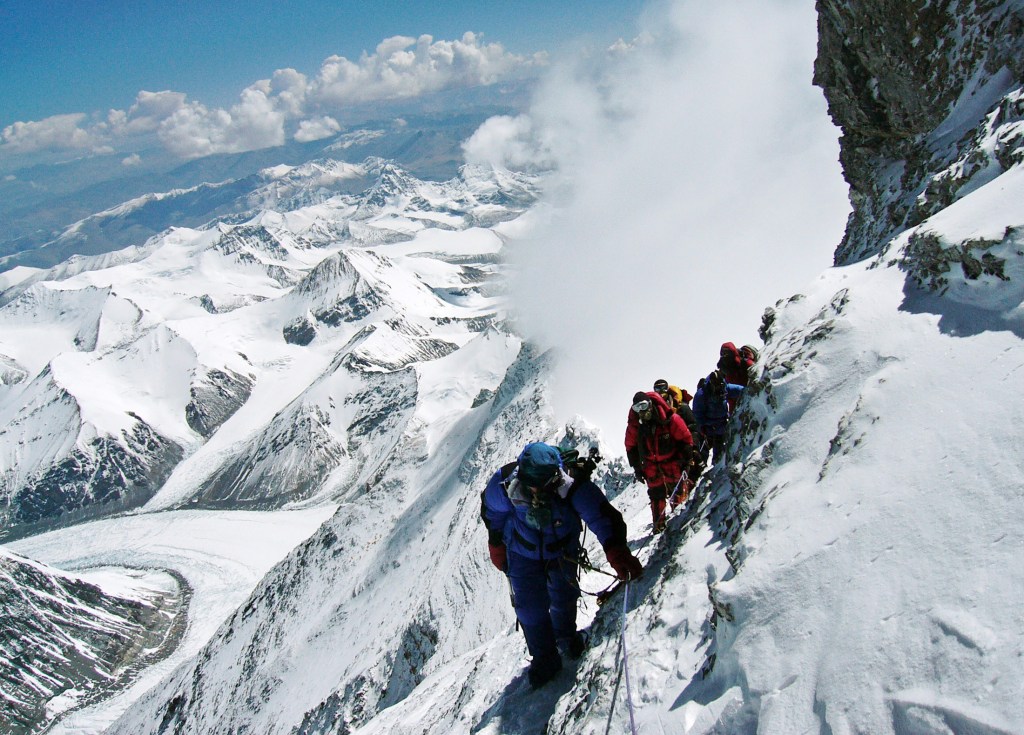
The book led us through the journey that the journalist took along with his expedition team members (and other teams), and the more I read into it, the more I understood how much attraction and deep excitement mountaineering could give to people. It’s high risk but high reward. While you are at the top of the mountain, you feel serenity and solidity – the world is yours. And if you’ve conquered some most difficult peaks in the world, there’s nothing more that will stand between you and success/satisfaction in life, for good.
I mean, still, I won’t do it. As conservative as I am deep in heart (as a consultant by training), I appreciate Krakauer’s detailed and thoughtful words on those excited, frustrated and desperate moments on the mountain, which totally transformed how I would depict a mountaineering experience.
The book reminded me of one case study I read during b-school on Mt. Everest. It might have been another tragedy that happened in that mountain (I couldn’t recall the full details), and talked about a similar situation where some team members got stranded up in the mountain and unfortunately died after some desperate attempts. “Little fires everywhere”, the phrase that kept coming to me while I was reading the case study and the book. I still remember that we actually did an in-depth analysis on what led to the tragedy, and what could have been done to prevent this from happening at the first place. Typical b-school approach, huh? But it did have some influence on what I think while reading. I couldn’t help but kept having thoughts around, oh, this is a management issue – should have communicated this with the members even more clearly and strictly kept to the principles, oh, this is an ethical issue – how could they just walk pass the desperate and weak mountaineers who were stuck without at lease making an attempt to help.
Now I think about it, I’ve been too mean. In the end, they are all human beings. When it came to the survival point (live or die), none would have been able to think or react as the most rational person (nor would us if we were put in that situation), not to mention that they were at 27k+ feet high on the mountain with no sufficient oxygen to breathe and think.
There’s one moment that struck me – when Sandy and her quad couldn’t locate the camp on South Col but waiting fully exposed in the wind and hard snow with the hope that the storm would go lighter in hours, or someone would find them and rescue the team. Sandy cried in desperate with the wind blowing hard in the background, “I don’t want to die. I don’t want to die here.”
When some of us are struggling with whether size 9 or 10 fits better on a client slide (and get frustrated out of it), they are experiencing the real life or death moment. So, what are we struggling about, really?
I followed up with a documentary made by the IMAX expedition team that was on the mountain at the similar timeframe. In this documentary, all the characters in the book became real. They talked about what they enjoyed, what they experienced, and what they struggled upon along the journey. People seemed all too sane and neutral from that movie that I almost doubted whether things were that bad as described in the book, until I accidentally caught sight of the amputated arms or fingers of some interviewees.
This is real. So many people lost their lives, arms, fingers, noses, eye sights because of this. But no one regretted the experience, and still many more are en route to this dangerous natural wonder. The good thing is, at the end of the book, Krakauer spent a chapter talking about how people learned from this tragedy and started to take actions to prevent similar things from happening (e.g., more strict guidelines that all clients shall stick to, one sherpa per client, no oxygen bottles on the top to talk the unqualified out of going at the first place etc.).
Everyone has their own belief that they hold on to. And I respect that. One of the professors in my class “bragged” about his experience peaking Mount Everest (sorry to have used “bragged” but that was literally how I felt at that time). When he proudly talk about this, I didn’t get how risky it was but just felt that this professor was really cool. Now that I look back, I pay full respect to this person, who is a high achiever in academia with a happy family, and is still willing to take a significant risk to fulfill his dream.
With all those people having ambitious dreams and willing to even risk their life to achieve those, I started to question myself – what am I doing? Am I wasting my life here staying at my comfort zone and living a peaceful life?
Maybe it’s just everyone has different interpretation of what a good life means.
 SweetS